Eilam Shapira

Hey there! I’m Eilam Shapira, a PhD Candidate at the Technion – Israel Institute of Technology, advised by Prof. Roi Reichart and Prof. Moshe Tennenholtz. In 2025, I was selected as a Google PhD Fellow in Natural Language Processing.
My research is about agents that communicate, reason, and make decisions in strategic environments. A central theme is what I call strategic multi-agent interaction with human language: settings in which humans and agents bargain, persuade, negotiate, cooperate, or compete through natural language, while their decisions carry economic or strategic consequences. I study how to build such agents, how to evaluate them, and how to predict the behavior of other agents and humans from limited interaction.
A second research direction grew naturally out of this work. In language-based strategic interactions, prediction rarely depends on text alone: models must also reason over structured game states, numeric quantities, histories, payoffs, and other tabular features. This led me to work on text-tabular learning: machine learning problems that combine natural language with structured numerical and categorical data.
I’m deeply passionate about infusing strategic thinking into all aspects of my life, from planning memorable trips to winning board games - my wife can vouch for both. I’m also fond of hiking, cooking, and supporting my favorite basketball team, Hapoel Jerusalem.
I am always happy to talk about my research and my papers. If you have any questions about them, feel free to reach out!
News
| Oct 17, 2026 | This week I gave talks at Yale, Brown, MIT, and Harvard! |
|---|---|
| Sep 24, 2026 | Two of our papers, “MulTaBench” (Spotlight!) and “STRABLE”, have been accepted to NeurIPS 2026! |
| Aug 30, 2026 | The GLEE Competition has ended! In 29 days, 542 agents (from 196 operators) and 315 humans played 8,614,601 games and made 177,199,691 decisions! |
| Aug 01, 2026 | The GLEE Competition, the official competition of the IAB workshop at NeurIPS 2026, is open! Build an agent (or play the games yourself as a human) until August 29. |
| May 13, 2026 | I gave a talk at the NLP Seminar of the Hebrew University of Jerusalem. |
Latest Posts
Selected Publications
- JAIR
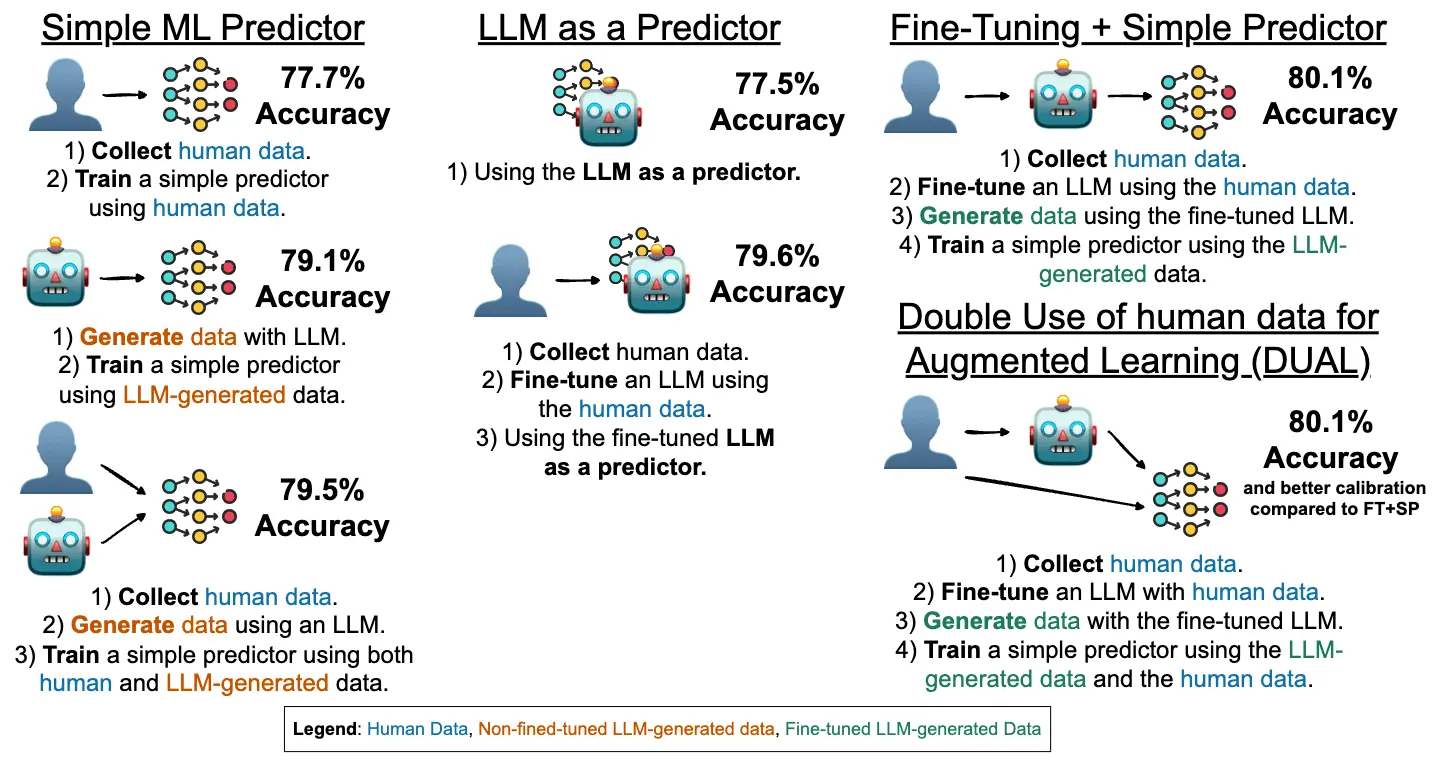
Results for the prediction task introduced in the paper, comparing alternative ways to use data from the 110 human players and from the LLM-generated players. - NeurIPS Spotlight
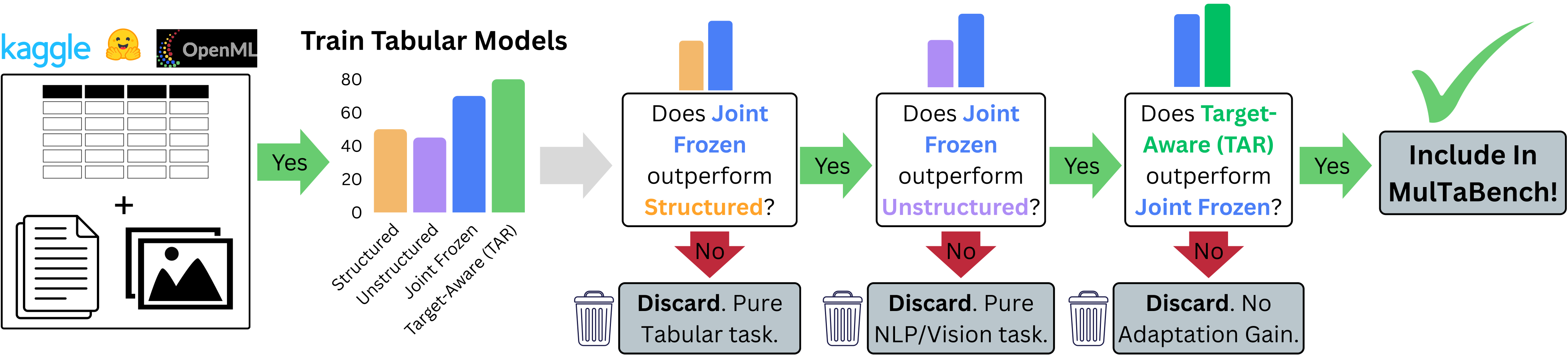
The MulTaBench Curation Pipeline. Datasets are included if joint prediction outperforms unimodal baselines and if Target-Aware Representations improve on frozen, off-the-shelf embeddings. -
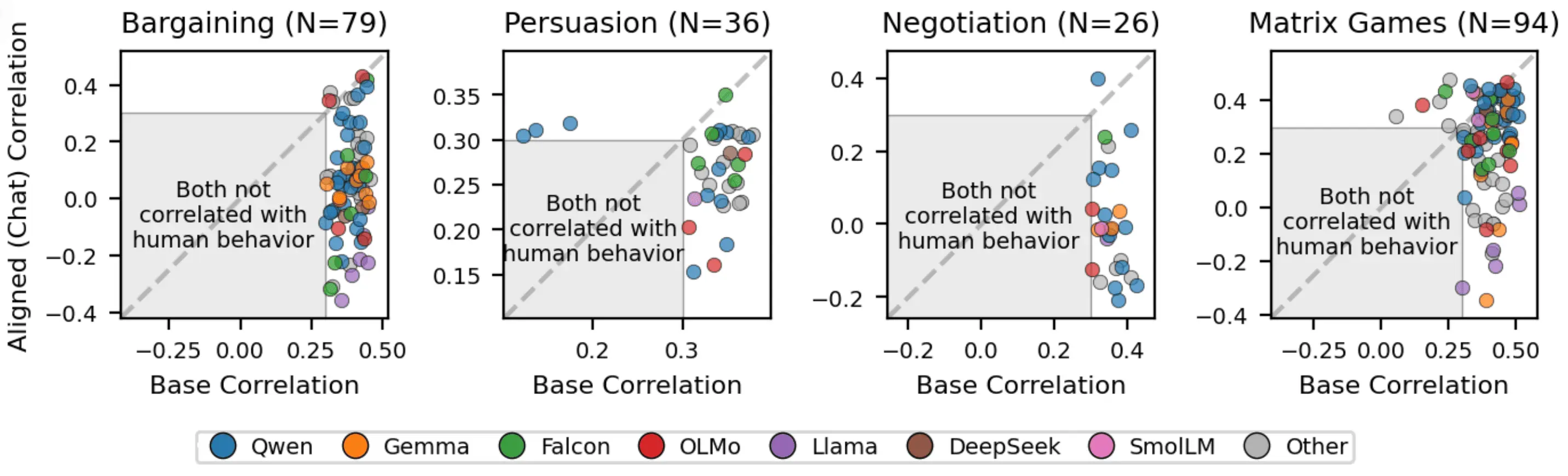
Pearson correlations of base models and human decisions (x-axis) vs. aligned models and human decisions (y-axis) across four game families. Points below the diagonal indicate base advantage. -
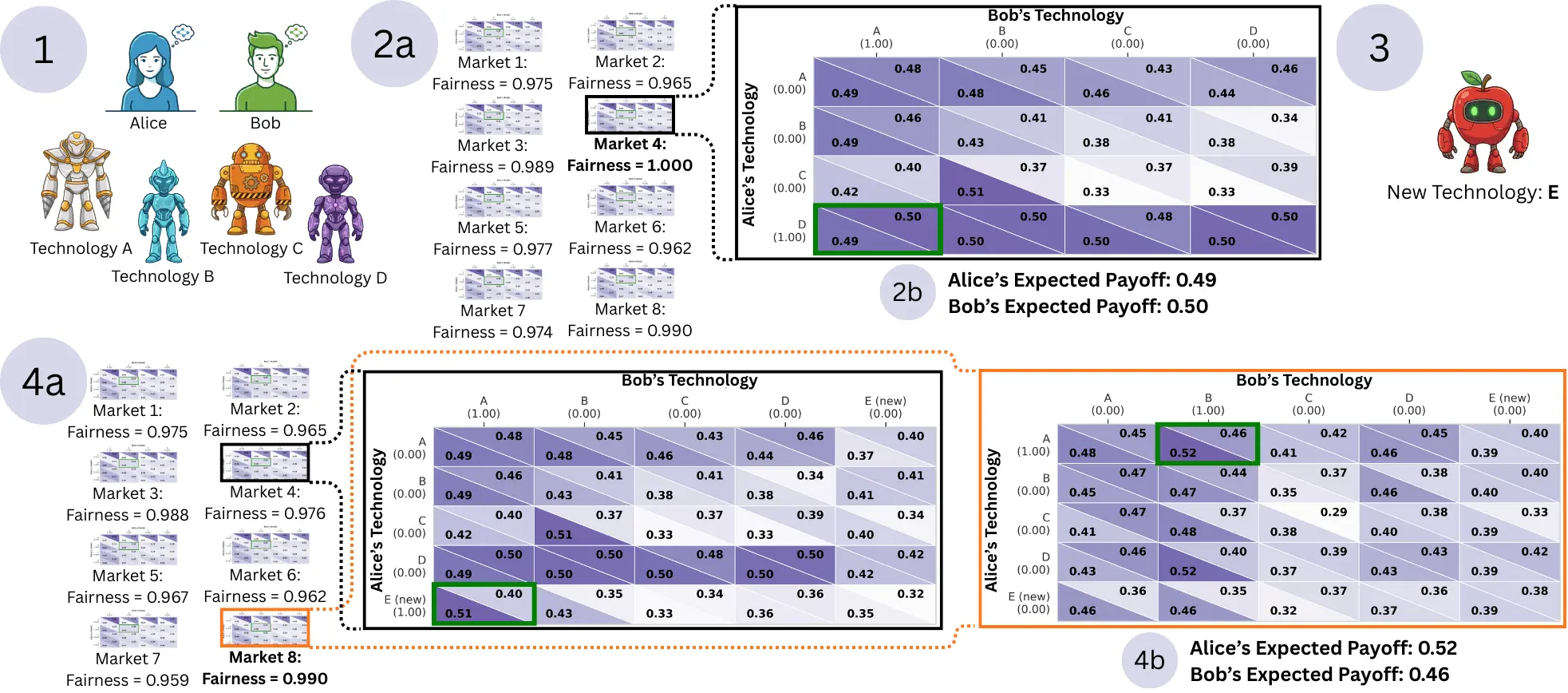
Illustration of the "poisoned apple" example, in which Alice increases her payoff at Bob’s expense by releasing a new technology—without the players actually using that technology in practice. - NeurIPS

The TabSTAR architecture illustrated with our toy dataset. The model processes numerical features, textual features, and all possible target values for classification.


